What Can a 40W Laser Cut? Materials, Thickness & Limits
A 40W laser can cut thin wood, suitable plywood, paper, cardboard, approved leather and selected fabrics. A 40W CO₂ laser can also cut clear acrylic; a blue diode laser generally cannot. Useful thickness depends on the exact material and machine. Glass engraving and metal marking should not be confused with cutting.
Start with the laser type, not just the wattage
Before comparing material charts, confirm whether 40W means optical laser output or electrical input. A machine advertised using its electrical consumption may deliver much less beam power. Also identify the source: CO₂, blue diode and fiber machines have different material interactions.
A desktop CO₂ cutter is a practical choice for mixed wood and acrylic projects. A blue diode can suit wood-based crafts and certain dark, opaque acrylics. A fiber marking machine belongs to a different purchasing category: its ability to mark metal does not establish that it can efficiently cut the sheet thickness you need.
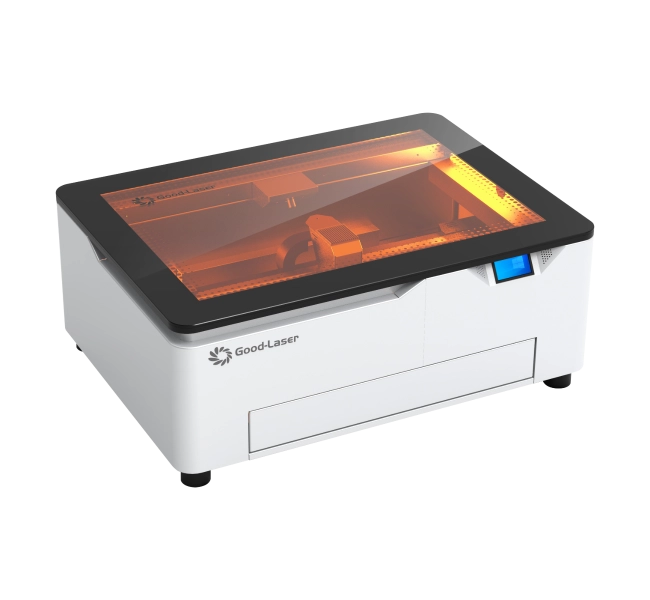
40W laser material compatibility at a glance
Use this table to shortlist materials for a manufacturer-approved sample trial. It is a compatibility guide, not a guaranteed capacity chart.
| Material | 40W CO₂ | 40W blue diode | What to check |
|---|---|---|---|
| Thin solid wood and laser-grade plywood | Common cutting applications | Common cutting applications | Species, glue, voids, actual thickness and edge finish |
| MDF | Conditional on approved composition and thickness | Conditional on approved composition and thickness | Binder, smoke extraction and charring |
| Clear acrylic / PMMA | Suitable material category | Generally unsuitable for direct cutting | Confirm the sheet is PMMA and the machine supports its thickness |
| Opaque acrylic | Suitable material category | Depends strongly on colour and formulation | A black-sheet result does not establish performance on white or blue stock |
| Paper and cardboard | Common cutting applications | Common cutting applications | Coatings, adhesives and fire control |
| Leather, cork and textiles | Selected, documented materials | Selected, documented materials | Tanning chemistry, backing, dyes and additives |
| Glass, ceramic and stone | Some engraving applications; not routine through-cutting | Surface treatment and material dependent | Do not translate an engraving demonstration into a cutting claim |
| Metal sheet | Not a general-purpose desktop cutting application | Special thin-sheet demonstrations are not a production specification | Request proof for the exact alloy, thickness and finished edge |
How thick can a 40W laser cut?
There is no universal maximum. Good-Laser’s wood laser cutter page gives 3 mm at 40W as a wood-processing reference, while noting that hardness and machine power affect depth. Treat that figure as a starting point for a conversation about your stock, rather than a promise for every plywood or hardwood.
Three millimetres and one eighth of an inch are also not identical: one eighth of an inch is 3.175 mm. Measure the sheet instead of designing press-fit joints around its retail label. Test the smallest slots and narrowest bridges in the actual drawing.
For 5–6 mm stock, ask for a sample made on the exact machine configuration. Record whether it separates in one pass, the total cycle time and the amount of finishing required. A demonstration of unusually thick, soft wood provides little evidence about dense plywood with difficult glue lines.
Wood and plywood
Solid wood varies with grain, density, moisture and resin. Plywood adds hidden variables: glue layers, internal gaps and repaired veneers. A sheet can cut cleanly in one area and leave an uncut bridge elsewhere. Test several areas before quoting a batch.
Choose documented stock intended for laser processing. For a decorative box, inspect the assembled joints and exposed edges as well as the cut outline. If sanding removes too much material from a tab, a successful cut can still produce an unacceptable part.
Acrylic
Clear acrylic is a strong reason to evaluate CO₂. Blue light passes through clear PMMA too readily for ordinary direct cutting. Adding a surface coating may help certain marking processes, but it does not establish clean through-cutting capability.
Cast and extruded acrylic can produce different engraving and edge results. Specify which you are buying and retain the supplier’s identification. Transparent polycarbonate is a different plastic; visual similarity is not evidence of laser compatibility.
Paper, fabric and leather
Thin stock can be easy to penetrate yet difficult to finish well. Paper can scorch at fine corners, fabric can move during the job, and synthetic textiles may melt at the edge. Leather finishes and backing layers need checking independently of the base material.
Use a documented laser-compatible material and the machine’s approved holding method. For packaging, test folds and adhesive areas as well as outlines. For patches, judge the edge after normal handling rather than immediately after cutting.
Materials to keep out of the cutting queue
Do not laser-process PVC or vinyl, PTFE, or unidentified plastics and coatings. Hold unknown faux leather, foam, laminates and composites until their composition and suitability are confirmed. An extraction system does not make a prohibited material acceptable.
ABS and polycarbonate are poor default choices for a desktop materials list. Resin-bound fiberglass and carbon-fiber composites also need specialist assessment. Consult the supplier’s documentation and your machine’s approved-material list; do not identify an unknown plastic by burning it.
The manufacturer material-safety guidance provides additional distinctions between approved materials, conditional uses and prohibited compositions.
Can a 40W laser cut metal or glass?
A conventional desktop 40W CO₂ machine is not a practical sheet-metal cutter. Removing paint or changing an anodized surface is a marking operation. It leaves the underlying metal sheet intact.
Some diode and fiber systems demonstrate separation of very thin metal under specific conditions. Those results cannot be transferred to another source type or used as evidence for structural sheet cutting. If metal parts are the main output, specify the alloy, thickness, tolerance and daily quantity before selecting the process.
Glass is another common source of confusion. Surface frosting or engraving is not the same as cutting a glass panel into a finished shape. The LC40 manufacturer FAQ is a useful example of why material support must be read alongside the intended operation.
Why a cut can fail even when the material is suitable
Check the setup before increasing power. Focus errors, dirty optics, uneven stock and inadequate airflow can all change the result. A CO₂ machine also needs the cooling and optical maintenance specified for its design.
| Observed problem | Checks before another run |
|---|---|
| Only some areas cut through | Sheet flatness, local glue or voids, focus across the working area |
| Excessive darkening | Material composition, heat accumulation, extraction and approved air-assist setup |
| Wide or tapered edges | Focus, lens suitability, thickness and repeated passes |
| Cutting performance has declined | Optics, maintenance history and manufacturer diagnostics for the source |
| Small parts fit poorly | Actual sheet thickness, kerf compensation and finishing allowance |
Follow the manufacturer’s procedure for any optical adjustment. Do not compensate for a fault by exceeding rated operating limits. Stay with the machine throughout processing and follow its shutdown procedure if sustained flaming or abnormal behaviour occurs.
How to approve a sample for repeat production
- Identify the complete material, including coatings and adhesive layers.
- Record the machine, source type, optical power rating and material batch.
- Start with the manufacturer’s approved material settings and operating limits.
- Include a straight cut, a curve, a small hole and a representative joint in the sample.
- Inspect full separation, edge appearance, underside marks and fit after cooling.
- Repeat the successful result on another part of the sheet and record total job time.
Keep speed units explicit. A setting in millimetres per second is sixty times the same numerical value in millimetres per minute. Power percentages are controller settings, so an identical percentage on two machines is not a calibrated comparison of delivered energy.
Save the accepted file, material identification and operating record together. Recheck a new batch even when the supplier uses the same product name.
Choosing a Good-Laser system for the work you sell
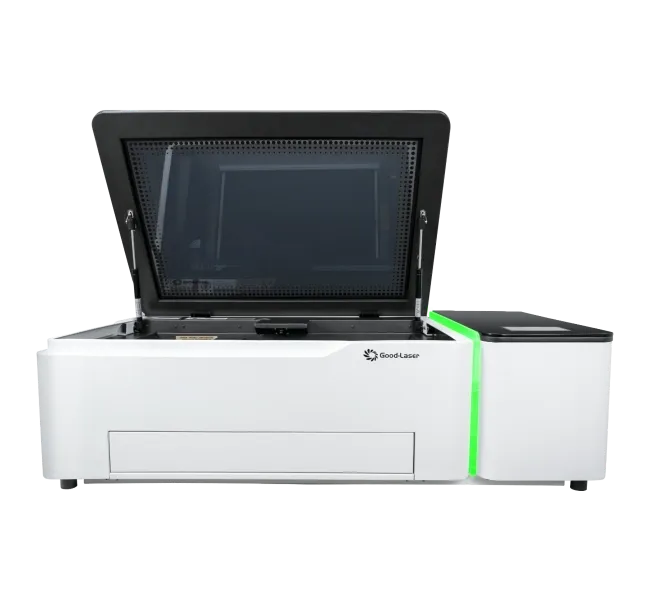
Begin with the jobs you expect to repeat: clear acrylic signs, wooden models, leather patches or paper packaging. Send Good-Laser the material specification, actual thickness, drawing, edge-quality requirement and daily quantity. Request a sample and timed run on the proposed configuration.
For a laser cutting machine for schools, include supervision, approved stock storage, extraction arrangements and operator training in the purchasing discussion. A compact machine still needs an appropriate installation and a clear operating procedure.
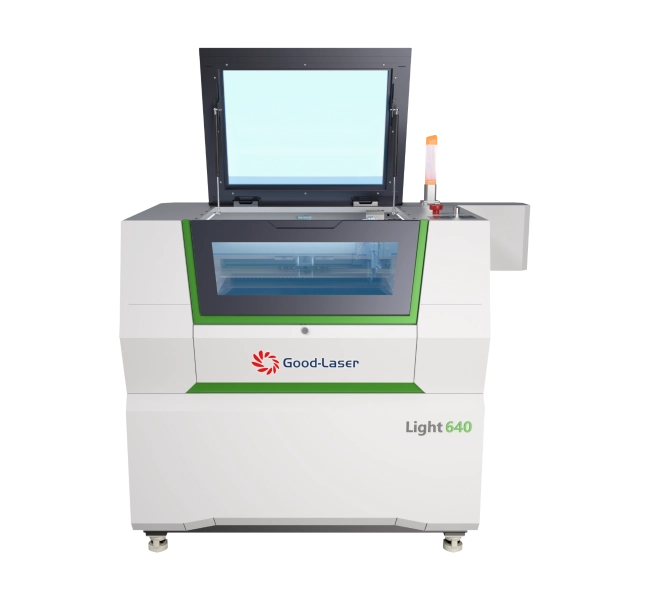
When asking how much is a laser cutting machine, compare the installed setup: extraction, cooling where required, accessories, maintenance and training. For regular thicker-stock cutting, evaluate a higher-power configuration against the actual batch time and reject rate. A higher wattage alone does not tell you the cost of an accepted part.
Frequently asked questions
Can a 40W laser cut 3 mm plywood?
It is a reasonable application to evaluate, and Good-Laser lists a 3 mm wood reference at 40W. Plywood species, glue and internal defects still affect the result. Request a sample from the same stock you intend to use, including the narrowest details in your drawing.
Can a 40W diode laser cut clear acrylic?
Generally, no. Clear PMMA transmits blue diode light too readily for normal direct cutting. A CO₂ machine is the more appropriate category to evaluate. Do not assume a demonstration on black acrylic applies to clear, white or differently coloured sheet.
Is 40W twice as fast as 20W?
Not necessarily. Higher optical power can improve throughput on a compatible material, but the finished result also depends on beam shape, motion, thickness and the required quality. Compare the same drawing and stock, including handling and finishing time, rather than calculating speed from wattage alone.
Can extra passes make any thickness possible?
No. Repeated passes can increase charring, taper and heat damage without producing a useful edge. The source, optics and material impose practical limits. Judge the finished part and total cycle time; merely separating a small sample is not enough to approve production.
Can a 40W laser cut stainless steel?
Do not buy a desktop 40W CO₂ machine for stainless sheet cutting. Marking, coating removal and thin-foil separation are different operations. Any claimed metal-cutting capability needs evidence for the exact machine, alloy, thickness and required finish.
What should I send with a sample request?
Provide the material name and supplier, thickness, surface treatment, design file, dimensions, expected quantity and acceptable edge finish. Include any tight-fitting joints. Ask for the machine configuration, pass count, total processing time and photographs of both faces and the cut edge.
Planning a wood or acrylic project? Ask Good-Laser to evaluate your material and drawing so the proposed system can be assessed against your finished-part requirements.