Fiber Laser Wavelength: 1064 nm, Materials and Selection
A fiber laser's wavelength depends on its active fiber and optical design. Many metal-marking machines use 1064 nm near-infrared light, while industrial cutting and welding sources often operate near 1070 or 1080 nm. Other fiber lasers emit near 1550 nm or 2 micrometers. The right choice depends on the material and required process.
For a buyer comparing engraving machines, the useful question is what that wavelength will do to the actual part. A metal tag, a clear acrylic sign and a molded plastic housing can respond very differently. Source power, pulse duration and focusing also determine whether the result is a shallow mark, a recess or a cut.
What does fiber laser wavelength mean?
Wavelength is the distance between successive peaks of the light wave, usually specified in nanometers (nm) or micrometers (µm). One micrometer equals 1,000 nanometers, so 1064 nm and 1.064 µm describe the same wavelength. That light is invisible to the human eye.
In a fiber laser, the active optical fiber contains a dopant, commonly a rare-earth element such as ytterbium, erbium or thulium. The dopant provides a range of possible amplification wavelengths. The seed source or resonator selects the operating output within that range. The word "fiber" identifies the gain medium; it does not specify one universal wavelength.
The pump wavelength is a separate specification. Pump diodes supply energy to the active fiber, often around 915 or 976 nm in ytterbium systems. The processing beam can then leave the source at a longer wavelength. A component labeled "976 nm pump" does not mean that the workpiece receives a 976 nm engraving beam. This component-level explanation separates pump light, active fiber and seed-source wavelengths.
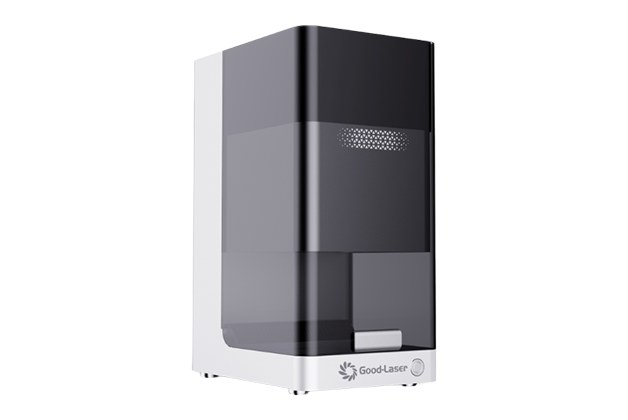
Common fiber laser wavelengths and their applications
Ytterbium fiber lasers cover much of industrial metal processing. Longer-wavelength fiber sources serve different applications, including selected polymer processes, sensing and scientific work. The figures below describe typical families and examples, not a tuning range available on every machine.
| Wavelength or region | Typical source context | What it means for selection |
|---|---|---|
| About 1030 nm | Some ultrafast ytterbium systems | Used in precision processing; pulse duration and optics are central to the application. |
| 1064 nm | Many pulsed fiber marking and engraving sources | A common starting point for metal identification and personalization. |
| About 1070 or 1080 nm | Many industrial ytterbium cutting and welding sources | Usually compare the complete power class, beam delivery and processing head. |
| About 1550 nm | Erbium-based fiber systems | Relevant to telecom, sensing and specialized processing; not the default desktop metal-engraving choice. |
| About 2 µm | Thulium-based fiber systems | Useful for selected polymers and other applications that benefit from different absorption. |
Specialized sources can extend beyond these examples. Published erbium, thulium and Raman source specifications show why a general claim that every fiber laser operates at 1064 nm is incomplete. These source families are broader industry options; their inclusion does not imply that Good-Laser supplies each one.
1064 vs 1070 vs 1080 nm: is one better?
These wavelengths occupy a relatively narrow near-infrared region. Their numbers alone do not establish which machine will engrave faster or cut deeper. A pulsed desktop marker and a high-power continuous-wave cutting system can have nearby wavelengths and very different capabilities.
For ordinary machine procurement, compare two candidates on the same material, artwork and acceptance criteria. For a wavelength-sensitive application, ask for the center wavelength, tolerance and spectral width. A source's nominal wavelength is not a promise that all its output occupies an infinitely narrow spectral line.
Wavelength, power and pulse frequency describe different things
Changing a marking software's frequency setting usually changes how often pulses arrive. It does not change the beam from infrared to green or ultraviolet. Confusing these specifications can lead to a machine purchase that cannot perform the required process.
| Specification | Typical unit | Question it answers |
|---|---|---|
| Optical wavelength | nm or µm | Which part of the spectrum reaches the material? |
| Average optical power | W | How much optical energy is delivered per second? |
| Pulse repetition rate | kHz or MHz | How many pulses occur per second? |
| Pulse duration | ns, ps or fs | How long does each pulse last? |
| Pulse energy | µJ or mJ | How much energy is contained in one pulse? |
| Focused spot and beam quality | µm; dimensionless M² | How tightly and consistently can the beam be focused? |
For a steady train of equal pulses, average power equals pulse energy multiplied by repetition rate. Raising the repetition rate while keeping average power constant therefore reduces energy per pulse. Real sources have operating limits, so a software adjustment may also change the available power or pulse shape.
Optical frequency is different again: it is related to wavelength by f = c/λ. At 1064 nm, it is approximately 282 terahertz. A marking setting of 30 kHz means 30,000 pulses per second, not a 30 kHz optical wave.
Does a MOPA laser use a different wavelength?
MOPA describes a master oscillator power amplifier architecture. In many commercial marking sources, it allows pulse width and repetition rate to be adjusted over specified ranges while the nominal wavelength remains 1064 nm. A manufacturer's MOPA source specifications provide a concrete example of those separate controls.
That extra control can help develop particular surface effects. It does not guarantee a requested color, depth or cycle time on every alloy. Ask for a sample made with the quoted source and lens, especially when consistent appearance is part of the order. Confirm MOPA capability explicitly; a "fiber laser" label alone does not establish it.
How wavelength affects metal, plastic and acrylic
A material must absorb some of the beam's energy for a processing effect to occur. Absorption changes with wavelength, but also with composition, coatings and surface condition. Two parts sold under the same broad material name may need different processes.
Bare metals and identification marks
Near-infrared fiber systems are widely used for metal marking and engraving. Specify the alloy and finish, then distinguish material removal from a surface color change or coating removal. A dark mark may meet an identification need without being a deep engraving.
Polished copper, brass and aluminum require particular attention to reflected energy and the source's suitability for reflective materials. Avoid assuming that all metals absorb 1064 nm equally well. Ask the supplier to confirm the supported material and demonstrate the complete process.
When selecting a qr code laser engraver, include the actual code in the sample request. Evaluate contrast and readable module spacing after cleaning and finishing. The wavelength specification cannot tell you whether the finished code will scan.
Plastics and coated parts
A suitable near-infrared laser can mark some plastics, but resin grade, pigments and additives strongly affect the result. One black plastic may produce a clear mark while another melts or shows little contrast. Test the exact production compound, including any coating, and confirm that it is suitable for laser processing.
For heat-sensitive components, compare a suitable UV or ultrashort-pulse process when a standard fiber marker fails the sample requirements. A shorter wavelength can change absorption and achievable focus; it does not remove the need to control heat and inspect damage.
Clear acrylic, glass and wood
A common CO₂ laser wavelength is 10.6 µm, or 10,600 nm, approximately ten times the wavelength of a 1064 nm fiber marker. The two belong to different infrared regions and interact differently with materials.
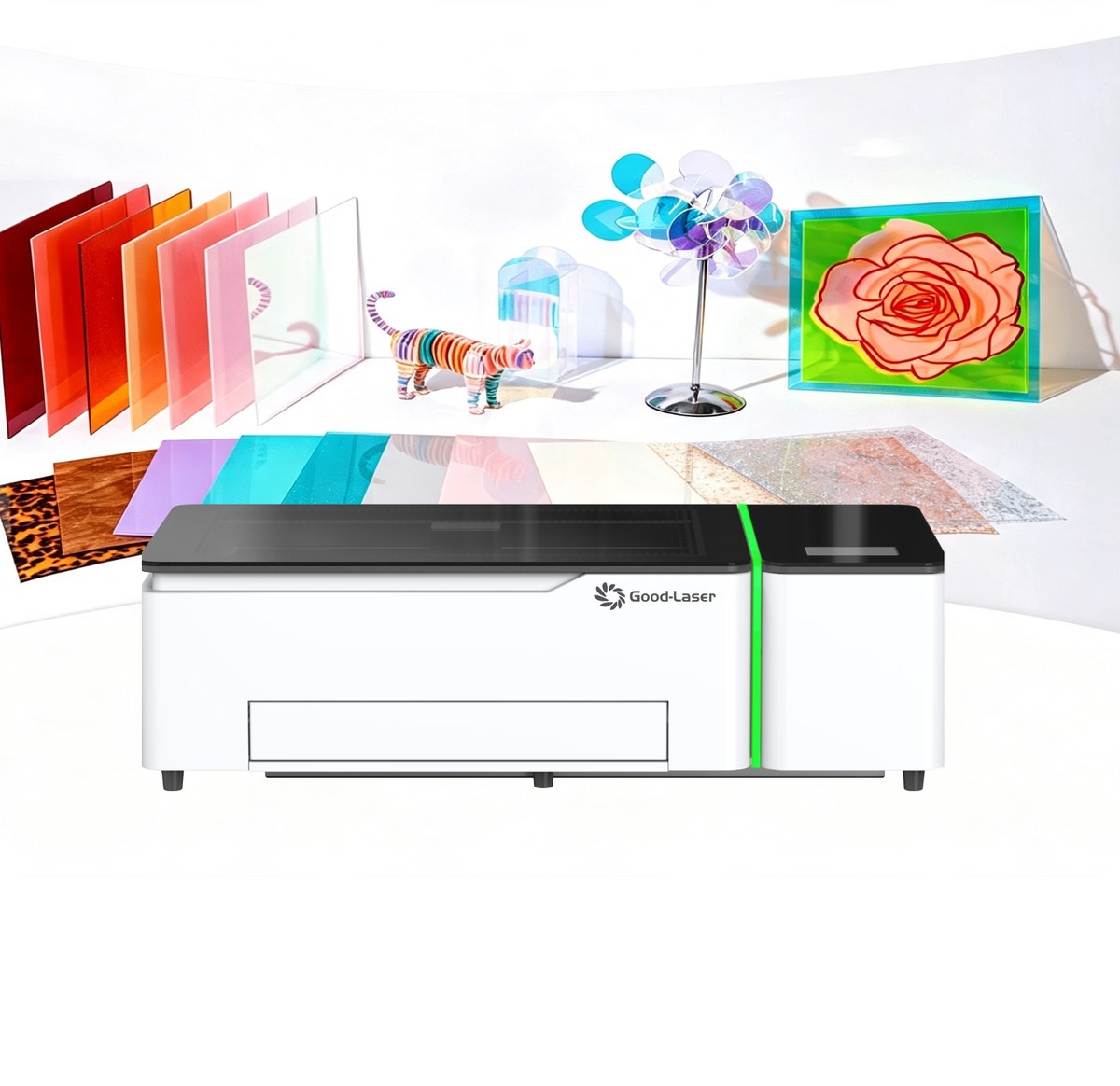
A conventional 1064 nm marker is generally a poor starting point for cutting clear acrylic sheet. Clear materials can transmit much of the near-infrared beam. For clear acrylic signs and compatible wood products, a CO₂ system is usually a more relevant category to evaluate.
Good-Laser's Light 530 is a CO₂ cutting and engraving product, while the Mark M20 is presented as a fiber marking machine. A product photo or a broad "supports acrylic" claim does not establish that these machines perform the same operation. Ask whether a demonstration shows a coated surface, a modified material, surface marking or cutting through the sheet.
Can you change a fiber laser's wavelength?
Most production engraving machines have a specified output wavelength that the operator does not change through the normal job settings. Power, speed and pulse controls adjust the process within the source's capabilities.
Specialist tunable lasers and frequency-converted systems do exist. Frequency conversion can produce green or ultraviolet light from a suitable infrared source using additional optical components. Changing a software setting on a standard 1064 nm engraver does not add that hardware. If a supplier advertises several wavelengths, ask whether the machine contains separate sources and which one performs each operation.
Choosing a Good-Laser machine for the job
Consider the Mark M20 for a discussion about desktop fiber marking, particularly for compatible metal identification or personalization. Good-Laser's supplied brochure identifies fiber configurations rated at 20 W, 30 W and 50 W. The quotation should identify the exact source, its wavelength and pulse characteristics, the supplied lens and the usable marking field.
A power option does not establish the outcome on your part. Request a representative sample with your artwork at the required size. Record the full cycle, including loading and inspection, and agree on how contrast, depth or readability will be checked.
For a mixed workshop, choose around the orders you expect to produce. Separate metal marking from acrylic cutting and wood engraving in the purchasing brief. That may lead to a different machine category or more than one process.
If your next question is how much does a laser engraver cost, compare quotations that include the same source configuration, extraction, fixtures, software and training. A lower machine price can conceal a different working field or a process that takes longer on the actual part.
Safety depends on the wavelength and the complete system
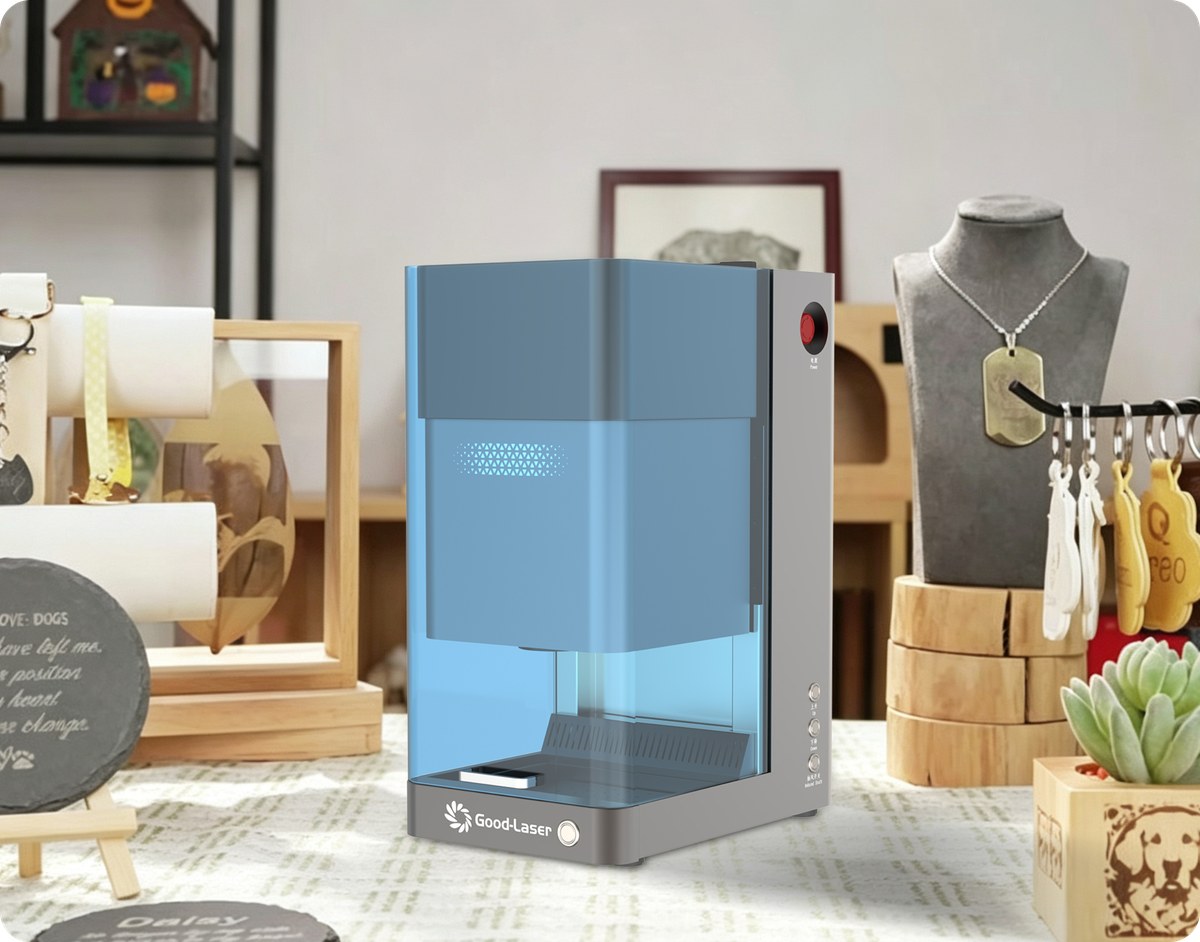
The infrared processing beam is invisible. A visible aiming light does not show its power or make the work area safe. Direct and reflected beams can present serious eye and skin hazards, particularly with exposed high-power sources; OSHA's hazard guidance describes these risks by laser class.
Ask for the complete machine's classification and operating instructions. Use the specified enclosure and interlocks, appropriate extraction and the protective equipment required by the risk assessment. Eyewear must match the wavelength and required protection level; its color alone is not evidence of suitability. Labels such as "eye-safe wavelength" do not mean a high-power source is harmless.
Frequently asked questions
Does a 1064 nm laser always use a fiber source?
No. Different gain media can produce the same nominal wavelength. Some crystal-based solid-state lasers also emit at 1064 nm. Check the source type as well as wavelength, especially when comparing compact infrared engravers. The wavelength alone does not identify the architecture or establish identical engraving performance.
Is the red positioning dot the fiber laser beam?
The visible positioning light is normally separate from the invisible infrared processing beam. It helps locate the intended work area but does not establish that the processing beam is absent or safe. Follow the machine's operating instructions and enclosure requirements even when you can see only a faint aiming dot.
Will a higher-wattage fiber laser have a different wavelength?
Power and wavelength are separate specifications. Sources with different power ratings can share a nominal 1064 nm output. Higher power may help a suitable process, but it does not automatically solve poor material absorption, focus errors or a mismatch between surface marking and cutting requirements.
Why can two 1064 nm machines produce different marks?
They may use different pulse durations, pulse energies, beam quality, lenses or scan parameters. Material batches and finishes can also differ. Compare the same part and artwork, then record the source and optical configuration used for the accepted sample. Copying a power percentage between machines is insufficient.
Can a fiber laser cut metal because its wavelength suits metal?
Suitable industrial fiber systems can cut metal, but cutting capacity depends on the complete machine. A desktop marking source, scan lens and work area should not be treated as a sheet-metal cutter. Specify material thickness, edge requirements and production volume before asking a supplier to recommend a cutting system.
Is 1550 nm automatically safe for the eyes?
No. The wavelength changes how the eye absorbs radiation, but safety also depends on accessible power, exposure and the system design. A source described as "eye-safe" in one application can still be hazardous under other conditions. Use the documented classification and safety requirements of the complete product.
Discuss your material with Good-Laser
Send the good laser team your material grade, surface finish, part dimensions and artwork, together with the required mark and expected batch size. Ask which configuration fits the job and whether a representative sample can be arranged. For a Mark M20 quotation, request the source specification and agreed sample acceptance criteria so you can evaluate the machine against the work you plan to sell.