Diode vs CO2 Laser: Which Is Right for Your Workshop?
Choose a blue diode laser when most of your work is engraving wood or cutting thin, compatible materials. Choose a CO₂ laser when clear acrylic, a wider range of nonmetal materials or regular sheet cutting is central to your business. Compare finished samples and total job time before choosing a machine.
The diode vs CO2 laser decision becomes easier when you list the products you actually intend to make. A studio engraving wooden gifts has different needs from a shop cutting transparent acrylic signs. Both may want crisp detail, but the material, production volume and finishing work can lead them to different equipment.
This comparison covers common blue diode engravers and desktop or workshop CO₂ systems. An optional infrared module is a different laser source with its own capabilities. Large industrial metal-cutting systems are outside this comparison.
Diode vs CO2 laser: the practical differences
| Buying question | Blue diode laser | CO₂ laser |
|---|---|---|
| What produces the beam? | A semiconductor source; common blue engravers operate around 450 nm | A gas laser; many engraving systems operate around 10.6 µm |
| What jobs should you evaluate first? | Wood engraving, paper and other approved thin materials | Acrylic signs, wood components and mixed nonmetal cutting or engraving |
| Can it cut clear acrylic? | Not directly with a typical blue source | A standard application for a suitably configured machine |
| What about colored acrylic? | Depends strongly on color, opacity and composition | Usually the more versatile choice; grade and thickness still matter |
| Does it engrave glass? | May require a compatible surface treatment; not equivalent to direct CO₂ processing | Can produce a frosted surface engraving on suitable glass |
| Is it a bare-metal engraver? | Some marking effects are possible; do not assume deep engraving or cutting | Coatings or marking compounds may be needed; desktop CO₂ is not a general bare-metal cutter |
| What maintenance should you expect? | Optics, airflow, cooling fans and the motion system | Optics and motion, plus source-specific cooling and beam-path maintenance |
| Which costs less? | Often lower entry cost, but enclosure and extraction can change the total | Often higher installed cost; worthwhile if the extra capability serves your orders |
These are category-level tendencies. They do not establish that every CO₂ machine is faster, or that every diode machine is smaller or cheaper. Compare the specific configurations offered in your quotation.
Why clear acrylic often decides the purchase
For regular clear-acrylic cutting, shortlist CO₂. Clear acrylic transmits much of the visible blue light from a common diode engraver, so adding more passes does not solve the underlying absorption problem. Acrylic absorbs the infrared output of a typical CO₂ engraving laser much more effectively.
A plastics supplier's acrylic compatibility explanation describes this wavelength difference. With a blue diode, the response of colored sheet depends on its pigments and opacity. A successful test on opaque black acrylic does not prove that transparent blue, white or pastel sheet will behave the same way.
Surface coatings can help create certain marks on transparent materials. That is a different process from cutting clean shapes through clear sheet. If your orders include transparent display stands, sign letters or acrylic components, ask for a cut sample in the exact grade, color and thickness you buy.
Inspect the edge, small holes and tight corners. Include any cleaning or finishing needed to make the part sellable. A maximum-thickness demonstration alone tells you little about the finish you will get in repeat production.
When a diode laser is a sensible choice
A blue diode system is worth evaluating when engraving is the main job and cutting is occasional. Personalized wood products, small signs and paper-based craft work can fit this workflow, provided the material is approved for the machine.
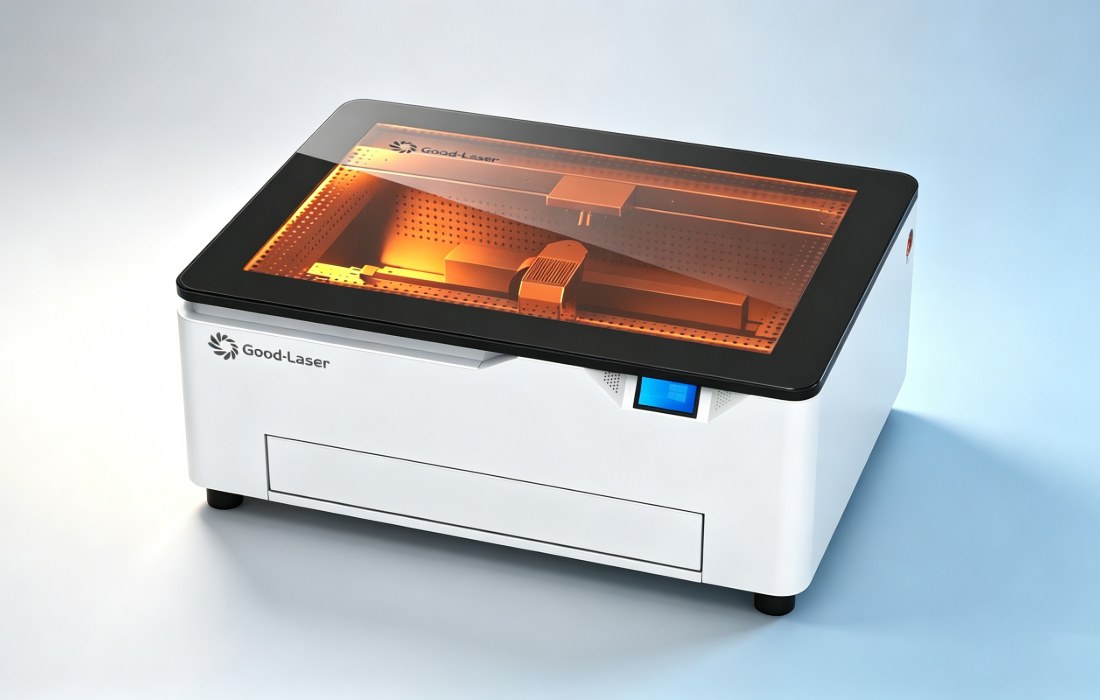
Good-Laser's Blue 530 is a blue diode laser engraver with an enclosed desktop layout. Its published options include 20W and 40W laser heads and a 520 × 315 mm working area. Those specifications help define a shortlist; a sample establishes whether its output suits your artwork and stock.
For wood engraving, compare fine lettering, filled graphics and shaded images separately. A machine that makes attractive dark text may need different settings for a photograph. Check the finished piece after removing residue and applying the intended oil, paint or sealer.
Do not assume a diode machine is an open-frame hobby tool. Enclosure, interlocks, extraction and positioning features belong to the individual machine design. Equally, a compact cabinet still needs space for ventilation, loading and routine access.
When CO₂ is worth the additional investment
CO₂ becomes more attractive when cutting occupies a large part of the working day, when acrylic color changes between orders, or when one machine must handle several nonmetal product lines.
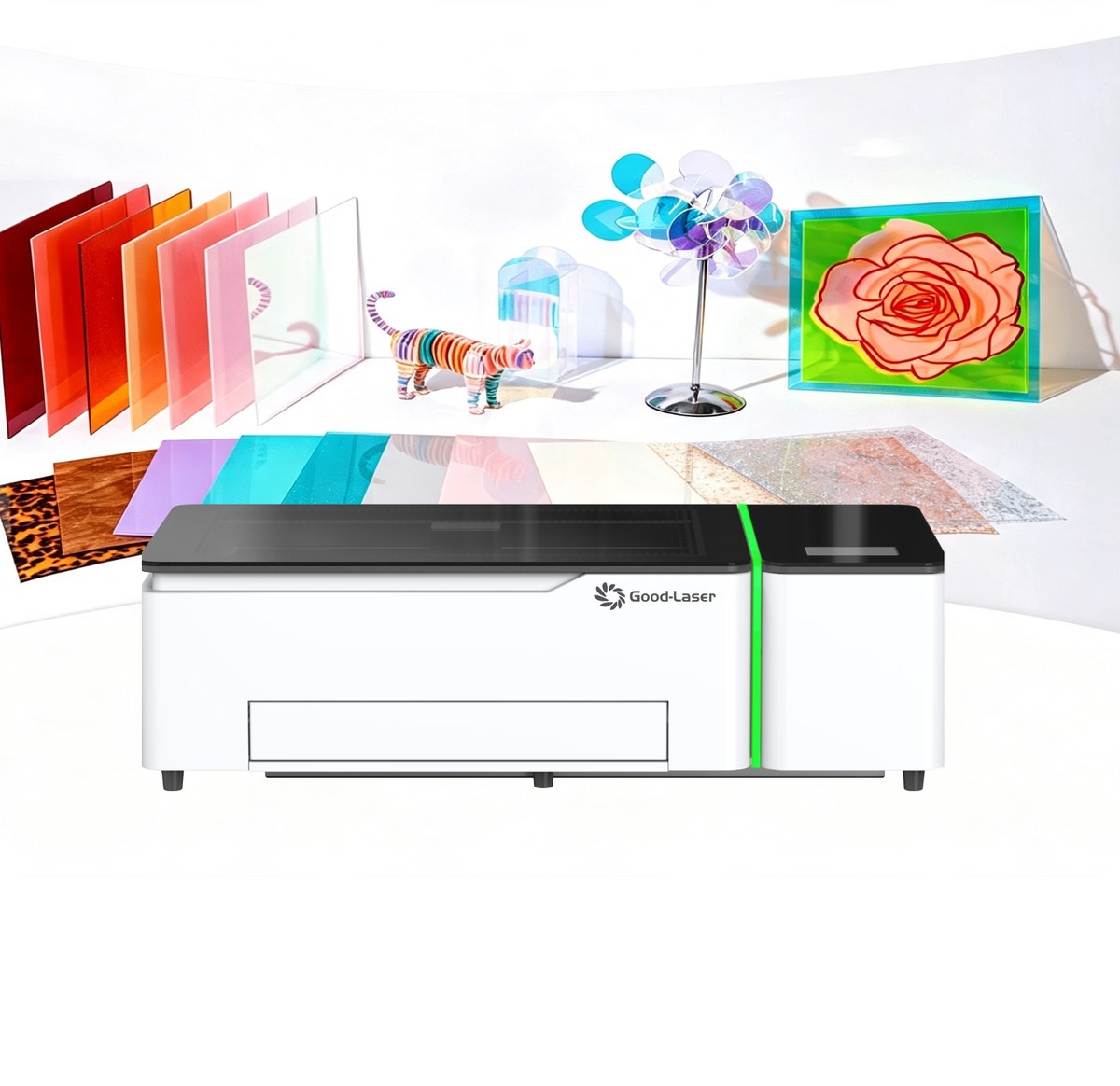
Good-Laser positions the Light 530 as a desktop CO₂ cutting and engraving machine. Its published 55W laser rating and 520 × 315 mm work area make it a useful comparison with the Blue 530 when the footprint must stay modest. A shared work area does not mean the two machines process the same materials.
For larger parts or a broader commercial laser setup, the Light 640 series is another option to evaluate. Its published work area is 600 × 400 mm. Confirm the quoted source, power option, cooling requirements and usable loading clearance before arranging the workspace.
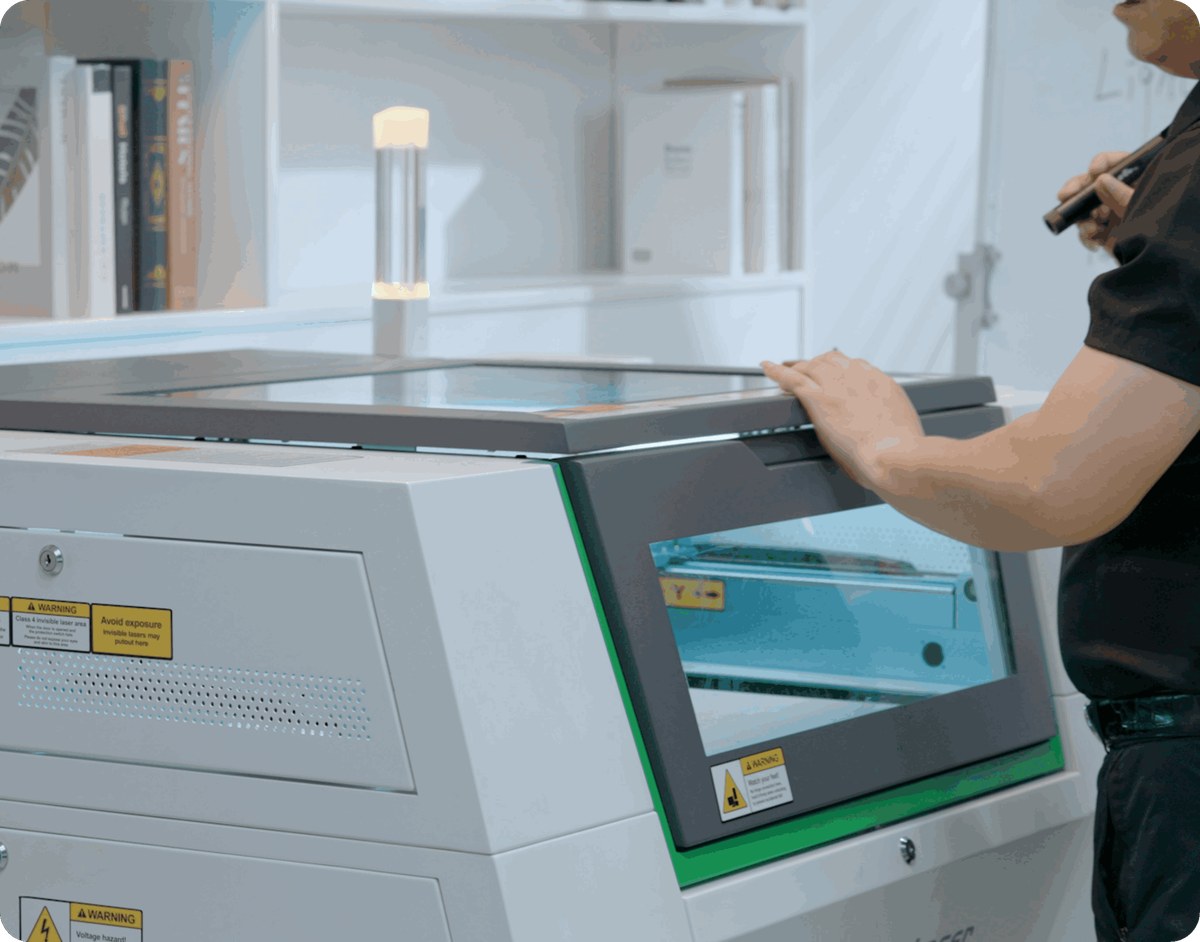
A larger bed helps only if you use it. Sketch a typical sheet layout, leave space for fixtures, and count how many parts fit. Then compare the time needed to load, process, unload and clean that batch.
Wood, glass and metal need different comparisons
Wood and plywood
Both laser types can work well on suitable wood. Cutting performance depends on species, thickness, moisture and, for plywood, the adhesive and internal structure. A setting that works on one supplier's sheet may leave uncut sections in another.
When choosing a plywood laser cutter, send stock from the supplier you intend to use. Ask for both an engraved area and a through-cut part. Inspect edge darkening, residue, fit between mating parts and whether the cut releases without forcing it.
Glass
CO₂ is a practical starting point for glass laser engraving. Surface engraving is different from cutting a glass shape or creating an image inside a crystal block. Glass composition, curvature and surface condition affect the result, so test the actual item.
A blue diode may produce a mark with an appropriate coating or preparation method, but that adds process steps. Include coating application, cleanup and repeatability in the comparison. For drinkware, check the rotary setup and available clearance as well.
Metal
Keep metal marking separate from metal cutting. Removing a colored coating from a tumbler does not demonstrate that the laser can cut its metal wall. A visible surface mark also does not establish engraving depth or abrasion resistance.
If most of your work is bare-metal identification or engraving, widen the shortlist to a suitable fiber marking system. Ask for the actual alloy and finish in the sample. Buying a larger diode or desktop CO₂ machine may still leave the main material requirement unmet.
Compare completed jobs, not headline speed
The useful speed comparison is elapsed time for an acceptable part. A maximum movement speed does not tell you how fast a machine cuts your material, and a fast engraving setting may not deliver the contrast or depth your customer expects.
Give each supplier the same drawing, material specification and acceptance criteria. Record the number of passes, machine time, loading time and cleanup. Compare those results only after checking that the samples meet the same quality standard.
For example, if one sample needs an extra sanding step, include that labor. If a larger bed holds more parts but takes longer to fixture, include that too. This gives you a production comparison you can use in quotations.
Fine detail also needs a functional check. A qr code laser engraver application should be judged by whether the finished code scans reliably, including after finishing. Small advertised spot sizes alone cannot establish that result.
What do the wattage numbers actually mean?
Compare optical output power with optical output power. Electrical input, overall rated power and laser output describe different things. A large number on a listing may describe what the machine consumes rather than what the beam delivers.
Even equal optical wattages do not guarantee equal cutting results. Wavelength determines how the material absorbs the beam; focus, beam profile, air assist and motion control affect what happens at the surface. Ask the supplier to identify the power rating used in the quotation.
A useful sample report names the laser source and configuration, material thickness, settings and number of passes. Without those conditions, a claimed cutting depth is difficult to apply to your own work.
Budget for the installed system and routine upkeep
A diode system often has a lower entry price, while CO₂ may justify a higher investment through material range or production capacity. Compare complete quotations. A bare machine price can omit equipment you need before the first job.
A useful answer to "how much does a laser engraver cost?" includes extraction, any required cooling equipment, air assist, software, fixtures, delivery and training. Ask which items come with the machine and which are separate. Keep recurring filters and consumables in the operating budget.
Common diode systems use fan-cooled laser modules. CO₂ maintenance depends on the source: glass-tube systems generally require water cooling, while some RF configurations use air cooling. Do not buy a chiller or assume it is unnecessary until the supplier confirms the exact setup.
Both types need clean optics and a maintained motion system. For CO₂ equipment with an external mirror path, ask how alignment is checked and who performs it. Also ask about replacement components, service access and the maintenance tasks expected of the operator.
Plan extraction and safe operation before delivery
Both laser types can create hazardous fumes and a fire risk when processing combustible stock. A diode laser's lower power or visible beam does not make it safe to use without the specified protections.
OSHA's laser guidance addresses ventilation for fumes generated by cutting and other material interactions. Follow the machine's installation instructions for extraction, enclosure and access controls. A lid contains the processing area; it does not remove contaminants by itself.
Confirm the material and any coating before processing. Avoid PVC and unidentified plastics, keep debris out of the bed, and do not leave an active cutting job unattended. Any required protective eyewear must be suitable for the laser wavelength and operating conditions; glasses are not a substitute for a properly controlled workspace.
Frequently asked questions
Is CO₂ always better than a diode laser?
No. CO₂ is usually the more useful category for clear acrylic and a varied nonmetal cutting workload. A diode system can suit engraving-focused work with compatible materials and a limited budget. Choose from the products you plan to make, the finish you need and the number of acceptable pieces you must produce.
Can a 40W diode replace a CO₂ laser?
It may cover some of the same wood engraving and cutting jobs, but it does not replace CO₂ across all materials. Clear acrylic remains a major distinction for a common blue source. Compare optical power and test identical stock; there is no universal watt-for-watt conversion between the two laser types.
Which is better for detailed wood engraving?
Either can produce detailed work. The outcome depends on the lens, focus, beam behavior, material and settings. Compare your smallest lettering and a representative image at the intended size. Inspect them after cleaning and finishing, since residue or a darker coating can change the appearance.
Can a blue diode engrave clear acrylic with a coating?
Some preparation methods can help create a surface mark. They do not make direct clear-acrylic cutting a normal blue-diode capability. Evaluate the complete process, including coating consistency and removal. If clear acrylic is a regular part of your product range, a suitable CO₂ system is the more straightforward starting point.
Does every CO₂ laser need a water chiller?
No. Cooling depends on the laser source and machine design. Glass-tube systems typically use water cooling, while some RF sources are air-cooled. The supplier should specify the cooling equipment, environmental limits and maintenance for the exact configuration you order. Do not generalize from another model in the same series.
Which should a small business buy first?
Start with the orders you can reasonably expect to receive. Engraved wood gifts and occasional thin-stock cutting may support a diode purchase. Acrylic signs and regular sheet cutting make CO₂ more compelling. If bare-metal engraving dominates the workload, evaluate fiber equipment before committing to either.
Choose your Good-Laser configuration with a sample
Send Good-Laser your material type, thickness, artwork, largest part size and expected weekly quantity. State whether the job needs surface marking, engraving depth or a complete through-cut. Include the finish you will accept and any workspace limits.
Ask for a representative sample and a quotation that includes the equipment required to run it. Use the sample quality, total processing time and installed cost to choose between Blue 530, Light 530 and a larger Light 640 configuration.