Best Laser Engraver for Metal: A Practical Buying Guide
The best laser engraver for metal is usually a pulsed fiber laser when you need to mark or engrave bare metal. For coated products, a diode or CO2 machine may suit the coating-removal process. Choose by metal, finish, required depth and production volume, then confirm the result on your own sample.
This guide compares practical buying routes for workshops, personalization businesses and component manufacturers. It is based on published manufacturer information and application requirements, rather than hands-on rankings. Good-Laser is a laser engraving machine manufacturer, and its Mark M20 is a relevant starting point for a metal-focused enquiry.
Best Laser Engraver for Metal: Choose by the Finished Result
Start with what the customer must receive. A readable serial number, a recessed name and a logo revealed through paint can look similar in a photograph, yet require different processes. “Works on metal” alone is not a useful purchasing specification.
| Your main job | First machine type to evaluate | What the sample must prove |
|---|---|---|
| Logos and identification on bare stainless steel | Pulsed fiber laser marking system | Required contrast or depth on the exact surface finish |
| Recessed lettering on metal parts | Fiber system configured for material removal | Measured depth, edge quality and acceptable total cycle time |
| Names on painted or powder-coated items | A compatible diode, CO2 or fiber process | Clean coating removal without unacceptable damage below it |
| Identification on anodized aluminum | Laser process matched to the anodized finish | Legibility and whether the protective layer must remain intact |
| Decorative color effects on stainless steel | MOPA fiber system with suitable pulse control | Repeatable color on the specified alloy and finish |
If most orders involve bare metal, shortlist the appropriate metal laser first. If most involve coated gifts, test that finish before paying for capabilities you rarely use. Mixed-material businesses should evaluate each laser source separately, even when both sources sit inside one machine.
Fiber, MOPA, Infrared, Diode or CO2?
Laser source and process control matter more than a headline wattage. Two machines with the same advertised power can produce very different metal results because their wavelength, pulse characteristics, optics and available settings differ.
| Laser option | Useful metal applications | Buying limitation |
|---|---|---|
| Pulsed fiber | Bare-metal marking and engraving | Depth and throughput still depend on alloy, optics and configuration |
| MOPA fiber | Jobs benefiting from adjustable pulse duration, including selected color-marking processes | Extra controls require process development; color is not guaranteed on every metal |
| Compact infrared module | Small metal markings where the manufacturer confirms compatibility | An infrared wavelength alone does not prove fiber-level removal rate or production capacity |
| Blue diode | Compatible coated surfaces and selected metal-marking applications | A visible surface mark does not demonstrate useful engraving depth |
| Desktop CO2 | Suitable coatings, anodized finishes or approved marking-compound workflows | Do not assume direct bare-metal engraving from coated-metal examples |
Why fiber is the main starting point for bare metal
Pulsed fiber systems are widely used for metal marking and material removal. They are a sensible category to investigate for stainless steel tags, aluminum components and brass plates. Nevertheless, a material name is only the beginning: polished, brushed, plated and painted versions can respond differently.
Give suppliers the actual alloy and finish. Ask them to demonstrate the complete artwork at its intended size, rather than a large logo chosen because it is easy to produce. For a small part, verify that the fixture leaves enough room for focusing and loading.
When MOPA deserves a separate discussion
MOPA fiber systems can offer adjustable pulse duration, giving the operator more control over how energy reaches the surface. This can help with particular marking effects.
For a color-sensitive order, define the acceptable appearance under agreed lighting and test repeatability across production blanks. A color chart from another alloy is insufficient evidence. Also ask whether the quoted machine actually includes a MOPA source; the words “fiber laser” do not answer that question.
Where diode and CO2 machines fit
These options can make sense when a compatible surface layer is the target. Removing a dark coating to reveal lighter metal can create an attractive logo without engraving a recess into the underlying metal. A marking compound is another distinct workflow, with its own preparation and cleaning requirements.
Do not transfer conclusions from a coated tumbler to an uncoated steel component. Similarly, a compact infrared marking module should be evaluated on its own output and sample results, rather than treated as equivalent to every other infrared laser.
Engraving Depth and Surface Contrast Are Different Requirements
Engraving removes material to create a recess. Marking is a broader term covering identification produced through several surface processes. Laser annealing can create an oxide-based mark on suitable metals without the material removal associated with engraving, as explained in Laserax's annealing overview.
A dark mark is therefore not evidence of a deep engraving. Decide whether your priority is readability, a tactile recess, a decorative finish or identification that remains readable after a later operation.
If depth matters, put the required dimension and measurement method in the sample request. If contrast matters, agree how to inspect it on the actual finish. Parts that will be polished, coated or cleaned should be assessed after that operation as well. Do not infer corrosion resistance or service life from a fresh photograph.
Where the Good-Laser Mark M20 Fits
The fiber laser marking machine series includes the Mark M20, a desktop fiber model presented for metal marking applications. It is a relevant option to evaluate for small metal identification and personalization jobs, subject to sample testing and confirmation of the supplied configuration.
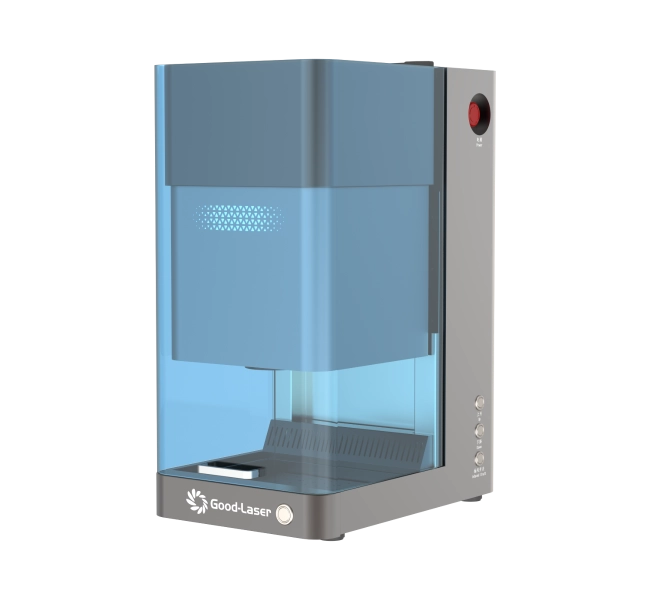
Its main buying appeal is a dedicated fiber marking route in a desktop format. The important limitation is that a product category does not establish your achievable depth, batch output or color capability. The public page contains different power references, so obtain a configuration-specific specification and quotation before comparing it with another machine.
Ask Good-Laser to identify the laser source, lens, usable marking field, working clearance, software and included accessories. If your project needs MOPA pulse control, a rotary fixture or a particular file workflow, request explicit confirmation. This guide does not assume those features are included with the Mark M20.
Match the Machine to Your Metal Products
Stainless steel parts and identification tags
Choose the desired finish first: high-contrast identification and recessed lettering are different acceptance targets. Test small characters and actual code content, including their required surrounding clear space. Read a code with the intended reader rather than judging its appearance alone.
Aluminum and anodized aluminum
Distinguish bare aluminum from anodized or painted aluminum in the enquiry. State whether the protective finish must remain continuous. A strong visual contrast can be useful, but it does not establish how the coating has been affected. Use representative production parts for approval.
Jewelry, brass plates and plated gifts
Identify both the base metal and any plating. A decorative bracelet may need fine text on a curved face, while a flat brass nameplate may need a consistent recess. Confirm the permitted effect on the finish and how the part will be supported without slipping or scratching.
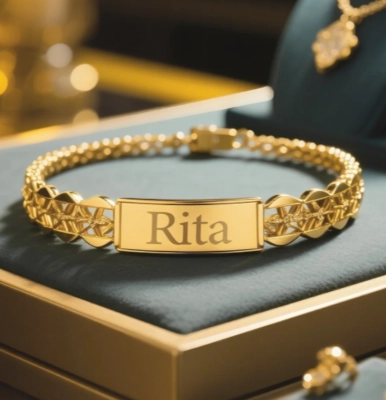
If you are selecting a laser engraver for metal, discuss the intended product and finish with Good-Laser. Use that discussion to agree an actual test, particularly for plated items, reflective finishes and curved surfaces.
Compare the Complete Workflow Before Buying
A useful machine comparison includes setup, loading, marking, cleaning and inspection. Maximum scanning speed describes only part of the job. For a small business, repeatable placement and straightforward job changes can be as important as the laser-on time.
| Comparison item | Request from the supplier | Why it matters |
|---|---|---|
| Material and finish | Tests on your alloy, coating and production blanks | Reduces the risk of buying from an unrelated sample |
| Depth or contrast | An agreed acceptance method and retained sample | Makes the required result reviewable |
| Field and clearance | Artwork and fixture shown in the usable workspace | Checks that the real part fits and can be focused |
| Batch output | Complete timed cycle, including handling and inspection | Supports a realistic output estimate |
| Installation and support | Included guarding, extraction requirements, software and support terms | Clarifies the complete setup and ownership cost |
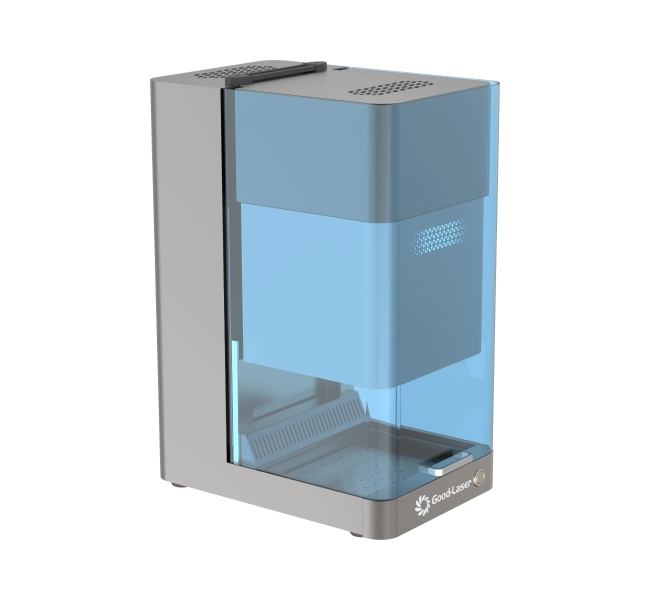
Budget for the installation you will use: appropriate extraction, fixtures, training and any necessary accessories. Confirm electrical requirements and the manufacturer's operating instructions. For a broader cost checklist, read our guide to choosing an affordable laser engraver.
Before accepting a sample, request a repeat run rather than approving one selected piece. Record the source configuration, lens, artwork and settings used. That gives you a useful reference for delivery acceptance and future troubleshooting, without assuming settings will transfer unchanged to a different machine.
Frequently Asked Questions
What is the best laser engraver for metal for beginners?
For mainly bare-metal work, begin by evaluating a suitable fiber marking system with clear training and a manageable workflow. For mainly coated gifts, a compatible diode or CO2 process may be sufficient. Ask for a demonstration covering file import, positioning, focusing and the completed sample, not just the laser running.
Can a diode laser engrave bare metal?
Some diode systems can produce marks on selected bare-metal surfaces, but that does not establish practical material-removal depth or compatibility with every alloy. Check the exact machine and material. If recessed metal engraving is the main requirement, compare a pulsed fiber system using the same artwork and acceptance criteria.
Can a CO2 laser engrave metal?
Desktop CO2 machines can work with suitable coatings, anodized finishes and approved marking compounds. Those processes should not be confused with directly removing bare metal. Ask which layer the laser changes and whether preparation is required. Base the purchase on the finished sample rather than a broad “metal compatible” label.
Is a higher-wattage fiber laser always better?
No. More available power can be relevant to material removal and output, but it does not replace suitable pulse control, optics or process settings. Compare the required result and total cycle on the same metal. For fine marking, buying excess capacity may deliver less value than better fixtures or support.
Do I need MOPA for metal engraving?
Not for every job. Conventional pulsed fiber systems are relevant to many marking and engraving tasks. MOPA is worth evaluating when adjustable pulse duration helps achieve a particular finish or process window. If color effects are essential, require repeatable samples on the intended alloy before approving the configuration.
Can a metal engraver also cut metal sheets?
Do not assume so. Marking, deep engraving and sheet cutting have different equipment requirements. Some systems can process thin metal under specified conditions, but that does not establish general cutting capability. If cutting is required, specify alloy, thickness, contour and edge quality as a separate application for confirmation.
Find the Right Good-Laser Setup for Your Metal Work
The best laser engraver for metal is the one that repeatedly delivers your required finish within an acceptable workflow and budget. A small identification tag, a personalized bracelet and a deeply engraved component should each lead to a different sample brief.
Request a metal laser engraving machine quote from Good-Laser. Send your alloy and surface finish, artwork, part dimensions, desired contrast or depth, expected quantity and delivery country. Ask the team to review the Mark M20 or another suitable option and confirm the sample result, included equipment and quotation before you decide.